


Article: Root Vegetable Miso Soup: An Ayurvedic Fall Recipe
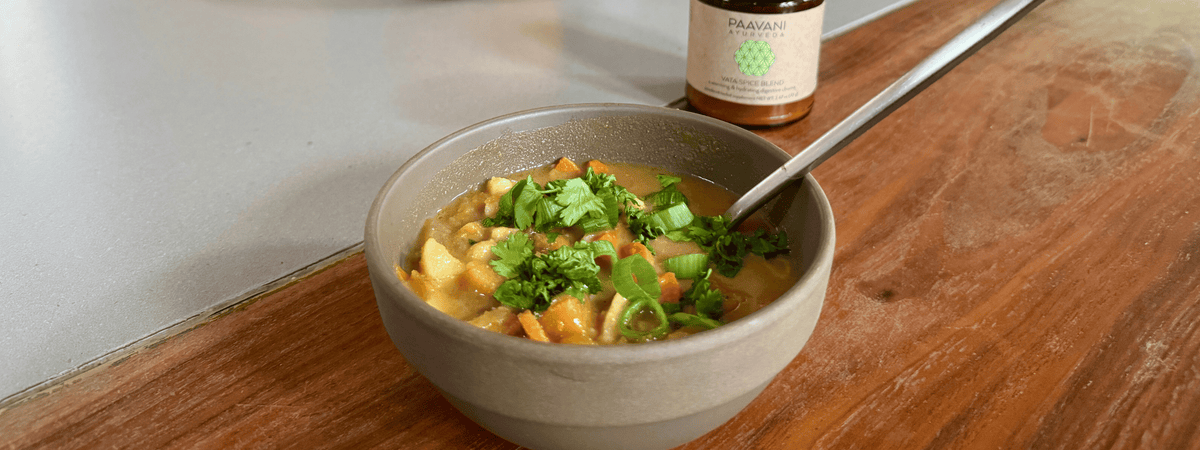
Root Vegetable Miso Soup: An Ayurvedic Fall Recipe
As the weather cools and the days grow shorter, there's something especially comforting about a warm bowl of soup. The seasonal shift often brings a natural craving for cooked vegetables, warming spices and meals that feel substantial without being heavy.
This Root Vegetable Miso Soup brings together the natural sweetness of carrots, sweet potato, parsnip and butternut squash with savory miso and aromatic spices. It's a simple, nourishing recipe to return to throughout fall and winter, whether you're preparing a quiet weeknight dinner or making a pot to enjoy over several days.
In Ayurveda, seasonal eating is an important part of maintaining balance. As fall brings cooler temperatures, drier air and more variable weather, the foods we choose can help introduce warmth, moisture and steadiness into our daily routines.
Why Root Vegetables Are Ideal for Vata Season
According to Ayurveda, fall and early winter are predominantly associated with vata dosha, which is characterized by cold, dry, light and mobile qualities.
As these same qualities become more pronounced in our environment, we may begin to notice their influence on the body. Dry skin, irregular digestion, a scattered mind or difficulty settling into restful sleep are all experiences traditionally associated with elevated vata.
Ayurveda approaches seasonal balance through the principle of opposites. During vata season, warm, moist, well-cooked foods are traditionally favored to help balance the cool, dry and light qualities of the season.
Root vegetables are particularly well suited to this approach. Growing beneath the soil, they develop dense, substantial textures and naturally sweet flavors that Ayurveda associates with nourishment and grounding.
When simmered until tender and prepared with warming spices and healthy fats, these vegetables become a comforting foundation for seasonal meals.
The Ayurvedic Benefits of Root Vegetables
Each vegetable in this root vegetable miso soup contributes its own flavor, texture and nutritional qualities.
Sweet potatoes provide complex carbohydrates, fiber and beta-carotene, which the body can convert into vitamin A. Their naturally sweet taste and soft texture when cooked make them a satisfying ingredient for vata-balancing meals.
Carrots contribute additional beta-carotene and a gentle sweetness that deepens as they simmer. Cooking softens their structure, making them easier to chew and often more comfortable to digest than raw vegetables.
Parsnips offer an earthy flavor, fiber and a subtle sweetness that complements the savory broth. Their dense texture becomes tender with cooking, adding substance to the soup.
Butternut squash brings a creamy consistency, natural sweetness and carotenoids. Its soft, moist texture is particularly welcome during colder months when warming, cooked foods often feel more satisfying.
Together, these seasonal vegetables create a nourishing base that reflects one of Ayurveda's simplest dietary principles: choosing foods with qualities that complement the needs of the season.
The Role of Warming Spices in Ayurvedic Cooking
Spices have long held an important place in Ayurvedic cooking, valued for their flavor and their traditional relationship with agni, the digestive fire.
In Ayurveda, agni describes the body's capacity to digest and transform food. When digestion feels irregular or sluggish, warm, freshly prepared meals with appropriate spices are traditionally used to support digestive comfort.
For this recipe, we use our Vata Spice Blend, a handcrafted combination of certified organic ginger, cumin, licorice and cinnamon.
Each spice brings a distinct quality to the blend:
Ginger contributes warmth and a gently pungent flavor and is traditionally used in Ayurveda to support digestion.
Cumin adds an earthy, savory depth and has a long history of use in Ayurvedic cooking.
Licorice offers a naturally sweet, harmonizing flavor that softens the intensity of warming spices.
Cinnamon brings aromatic warmth and a subtle sweetness that complements root vegetables.
Together, these spices create a balanced flavor profile that pairs beautifully with the natural sweetness of the vegetables and the savory depth of miso.
The Vata Spice Blend can also be incorporated into roasted vegetables, warm grains and other seasonal dishes, making it an easy addition to everyday Ayurvedic cooking.
Root Vegetable Miso Soup Recipe
This warming root vegetable miso soup combines tender seasonal vegetables, savory yellow or white miso and aromatic Ayurvedic spices in a light yet nourishing broth.
The vegetables become naturally sweet as they simmer, while the miso adds a rich umami flavor that brings the ingredients together. A finishing touch of toasted sesame oil adds depth and richness.

15 min
30-35 min
4 pers
V−, P±, K+
Ingredients
1 tablespoon ghee or sesame oil
1 small yellow onion, diced
2 carrots, sliced
1 small sweet potato, peeled and cut into bite-sized cubes
1 small parsnip, peeled and sliced
1 cup butternut squash, cubed
1 teaspoon PAAVANI Vata Spice Blend
5 cups water or low-sodium vegetable broth
1 tablespoon tamari or coconut aminos
2 tablespoons yellow or white miso paste
1 teaspoon toasted sesame oil
1 to 2 teaspoons fresh lime juice, optional
Sea salt, to taste
Fresh cilantro or sliced green onion, for serving
Sesame seeds, for serving, optional


Directions
Step 1
Warm the oil. Heat the ghee or sesame oil in a large pot over medium heat.
Step 2
Sauté the onion. Add the diced onion and cook for 3 to 4 minutes, stirring occasionally, until softened.
Step 3
Add the vegetables and spices. Stir in the carrots, sweet potato, parsnip and butternut squash. Sprinkle in the Vata Spice Blend and cook for another minute, stirring gently to allow the vegetables and spices to become fragrant.
Step 4
Simmer the soup. Pour in the water or vegetable broth and the tamari or coconut aminos. Bring to a gentle boil, then reduce the heat, cover and simmer for approximately 20 to 25 minutes, or until the vegetables are tender.
Step 5
Prepare the miso. Place the miso paste in a small bowl. Add approximately ½ cup of warm broth from the soup and whisk until the miso is completely dissolved.
Step 6
Incorporate the miso. Remove the soup from the heat and gently stir the dissolved miso mixture into the pot. Avoid boiling the soup after adding the miso to preserve its delicate flavor and, if using unpasteurized miso, potentially more of its live cultures.
Step 7
Finish the flavors. Stir in the toasted sesame oil and, if desired, a squeeze of fresh lime juice. Taste and add sea salt as needed.
Step 8
Serve warm. Ladle the soup into bowls and garnish with fresh cilantro or sliced green onion and sesame seeds, if desired.

An Ayurvedic Perspective on Miso
Miso is a traditional Japanese fermented seasoning made primarily from soybeans, salt and koji culture. Its savory, umami-rich flavor adds depth to broths, soups and sauces.
For this recipe, we recommend yellow or white miso. Yellow miso offers a deeper, more savory flavor that complements the natural sweetness of root vegetables, while white miso provides a milder, slightly sweeter taste. Both work beautifully with the warming spices in this soup.
Although miso is not a traditional Ayurvedic ingredient, it can be incorporated thoughtfully into modern Ayurvedic cooking. Ayurveda considers the qualities of food, how it is prepared and how it affects the individual.
From this perspective, miso's salty and fermented qualities can be warming and stimulating, while the naturally sweet root vegetables, nourishing oils and aromatic spices help create a balanced seasonal meal.
For those with sensitive digestion, fermented foods may affect individuals differently. Using a modest amount of miso allows its savory flavor to complement the soup without becoming overpowering.
Simple Ways to Make This Soup More Nourishing
One of the benefits of this root vegetable miso soup is its versatility. The recipe can be adapted depending on your appetite, the vegetables available and how substantial you'd like the meal to be.
Add Rice for a More Grounding Meal
For a heartier bowl, serve the soup alongside warm basmati rice or stir cooked rice directly into the broth before serving. Rice is traditionally favored in many vata-balancing diets, particularly when well cooked and served warm with a little ghee. Its soft texture and naturally sweet taste complement the vegetables while making the meal more substantial.
Include a Source of Protein
For a more complete meal, consider adding cooked mung beans or cubes of tofu. Both can complement the flavors of the soup while contributing plant-based protein. If using mung beans, cook them separately until tender before adding them to the soup. Split yellow mung dal is especially common in Ayurvedic cooking because of its soft texture and traditional reputation for being relatively easy to digest when properly prepared.
Adjust the Texture
For a thicker, creamier consistency, blend a small portion of the cooked vegetables with some broth before adding the miso, then stir the mixture back into the pot. This creates a richer texture without needing cream and allows the natural sweetness of the vegetables to become more pronounced.
A Simple Seasonal Ritual: Make Soup Part of Your Evening
As the days become shorter, dinner can be an opportunity to create a little more consistency in your routine. Ayurveda places importance on regular mealtimes and eating in a calm environment, particularly during vata season when irregular schedules and excess stimulation may contribute to feelings of restlessness.
Preparing a pot of soup offers a practical way to bring these principles into everyday life. The vegetables can be chopped ahead of time, the broth can simmer while you settle into the evening and leftovers can be enjoyed over the following days.
Try serving your soup warm, sitting down to eat without distractions and allowing yourself enough time to enjoy the meal comfortably.
These small adjustments can make an ordinary dinner feel more intentional while supporting a steadier daily rhythm.
Frequently Asked Questions
Is root vegetable miso soup good for vata season?
Yes. Root vegetable miso soup incorporates several qualities traditionally recommended for balancing vata, including warmth, moisture, softness and the naturally sweet taste of cooked root vegetables. Preparing the soup with ghee or sesame oil and warming spices further complements Ayurvedic dietary recommendations for fall and early winter.
What are the best vegetables for an Ayurvedic fall soup?
Sweet potatoes, carrots, parsnips, winter squash and other seasonal vegetables are commonly used in warming fall soups. Ayurveda traditionally favors well-cooked, moist and nourishing vegetables during vata season, particularly when prepared with appropriate spices and healthy fats.
Can I make root vegetable miso soup ahead of time?
Yes. This soup can be prepared ahead of time and stored in an airtight container in the refrigerator for approximately 3 to 4 days.
For the best flavor, consider preparing the vegetable broth and adding the miso when reheating individual portions. Warm the soup gently and avoid boiling after adding the miso.
Can I make this soup vegan and gluten-free?
Yes. To make the soup vegan, use sesame oil instead of ghee and choose vegetable broth.
For a gluten-free version, use certified gluten-free tamari and verify that your miso paste is gluten-free, as some varieties contain barley or other gluten-containing grains.
Can I use different root vegetables?
Absolutely. Turnips, rutabagas and other seasonal root vegetables can be used depending on availability and personal preference. Cut the vegetables into similarly sized pieces and adjust the cooking time as needed until they become tender.
Why add miso after cooking?
Miso is typically stirred into warm broth near the end of cooking to preserve its delicate flavor. Avoiding high heat may also help preserve some live cultures in unpasteurized miso, although not all miso products contain live microorganisms.
Seasonal Nourishment, One Meal at a Time
One of the most practical ways to bring Ayurveda into daily life is to pay attention to how our needs shift with the seasons. The foods that feel satisfying on a warm summer afternoon may be quite different from those we crave on a cool fall evening.
As you move through the colder months, allow those changing needs to guide what you prepare in the kitchen. A pot of soup made with seasonal vegetables and thoughtfully chosen spices can become a familiar part of your fall and winter rhythm.
Over time, these everyday choices help cultivate a more intuitive relationship with food and the changing seasons.
Bring More Balance to Vata Season




Leave a comment
This site is protected by hCaptcha and the hCaptcha Privacy Policy and Terms of Service apply.