


How Self-Abhyanga Supports the Vagus Nerve & Stress Resilience
Stress doesn’t always show up as “stress.”
Sometimes it looks like shallow breathing, tight shoulders and a short fuse. Sometimes it’s waking at 3 a.m., forgetting to drink water or feeling wired but tired. Sometimes it’s skin that suddenly feels reactive, digestion that feels unpredictable or a nervous system that can’t quite land.
Ayurveda offers a simple, time-honored answer to the common problem of stress: self-abhyanga.
Abhyanga, Ayurveda’s traditional warm, herbal oil massage, is not about doing more. It’s about giving your body a clear signal of safety which is where the vagus nerve comes in.
In this blog post, we’ll break down what the vagus nerve is, what its physiological functions are in the body, why building stress resilience is a daily practice and how self-abhyanga can support your body’s ability to shift from stress to steadiness.
What is the vagus nerve & why does it matter for stress?
The vagus nerve is a major communication pathway of your parasympathetic nervous system, the branch that supports rest, digestion, recovery and repair.
You can think of it like a bidirectional cable between your brain and body. It helps regulate things like:
heart rate & heart rate variability
breathing rhythm
digestion & motility
inflammation signaling
mood regulation & emotional recovery
the “settling” response after stress
When people talk about “vagal tone,” they’re describing how flexible your nervous system is. Stress resilience is not about never getting stressed. It’s about how efficiently you can recover.
Here’s the key: the nervous system learns through repetition. Consistent cues help the body recognize safety and regulation. Self-abhyanga offers this kind of signal, helping calm excess vata and support a more grounded, balanced state over time.


Ayurveda’s view of stress resilience: vata, ojas & nervous system steadiness
In Ayurveda, stress often aggravates vata first.
Vata is mobile, light, dry and changeable. When it rises, you may notice:
racing thoughts & restless sleep
dry skin or dehydration
constipation or irregular digestion
sensitivity to noise, cold or stimulation
mood shifts or feeling ungrounded
Over time, chronic stress often initiated by excess vata dosha can deplete ojas, which is Ayurveda’s concept of deep vitality, immunity and inner steadiness. Luckily, self-abhyanga is one of Ayurveda’s most direct ways to calm vata and support ojas because it delivers the qualities vata craves: warmth, steadiness, nourishment and containment.
If you want a deeper dive into vata patterns, start here: Understanding Vata.

How self-abhyanga supports the vagus nerve
When we look at self-abhyanga through a modern, practical lens, its effectiveness comes from engaging multiple nervous system inputs at once:
.
1) Slow, consistent touch signals safety
Your skin is not just a barrier. It’s an information organ. Gentle pressure and rhythmic movement can shift your attention into your body and reduce the “spinning” feeling that comes with stress.
Self-abhyanga creates a predictable sensory experience. Predictability is calming. It’s one of the simplest ways to tell the nervous system it can stand down.
2) Warmth supports a downshift
Warm oil plus warm hands is a direct antidote to the cold, dry quality that often accompanies stress states (and winter).
Warmth supports circulation and helps the body feel held. When your system feels held, it becomes easier to access parasympathetic tone, which is closely connected to vagal activity.
3) Rhythmic pressure supports regulation
There’s a reason people naturally rub their arms, legs or temples when they’re overwhelmed. The body seeks regulation through sensation.
Self-abhyanga applies steady pressure in a slow rhythm, which can help interrupt stress loops and support a more regulated baseline over time.
4) It pairs beautifully with breath
You don’t need to “meditate” to get benefits. Simply breathing a little slower while doing self-abhyanga can amplify the shift.
Try this: inhale through the nose for 4, exhale for 6. Do that gently while you massage. Longer exhales are a simple way to invite parasympathetic activity.


The 5-minute self-abhyanga ritual for stress resilience
You do not need a 60-minute spa routine. You need a self-abhyanga ritual you can repeat.
This version takes 5 minutes. Ten if you want to indulge.
Ayurveda recommends self-abhyanga before or after your bath or shower, but it can be performed at any time of the day.
Step 1: Choose your oil
A classic choice is sesame oil (warming and grounding), especially in colder months.
If you want to explore oils that are specifically formulated for abhyanga, start here: Herbal Body Oils.
If you like a more targeted match:
Dry, cold or vata-leaning skin: Vata Body Oil.
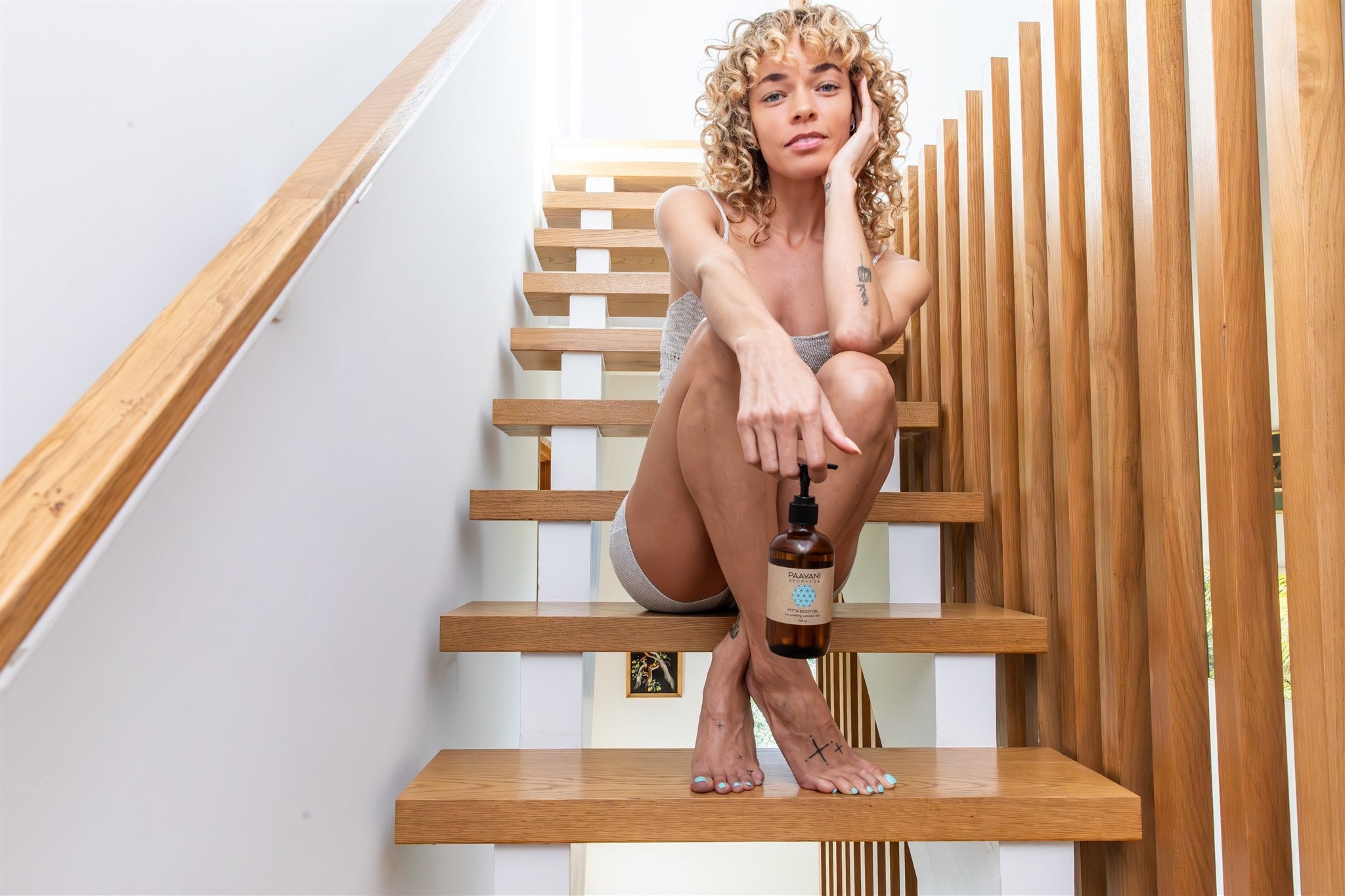
- Sensitive, reddish or pitta-leaning skin; Pitta Body Oil.
Sluggish, heavy or kapha-leaning days: Kapha Body Oil.
All-season, all-dosha support: Tridoshic Body Oil.
Aim for warm, not hot. You can place the bottle in a mug of warm water for a minute to heat up.
Step 2: Start at the scalp or ears
If you’re short on time, begin where vagal support often feels most noticeable: ears, jaw and neck.
Massage the outer ear slowly.
Trace along the jawline.
Glide down the sides of the neck.
Add gentle circles at the base of the skull.
Keep your pressure steady, not aggressive.
Step 3: Massage the chest & belly slowly
This is where many people hold stress without realizing it.
Use broad strokes over the chest.
Move to the belly and massage clockwise in slow circles.
If your digestion tends to tighten under stress, this step matters.
Step 4: Arms & legs, long strokes toward the heart
Use long strokes on the limbs and circular strokes on joints.
You’re not trying to “fix” anything. You’re creating a signal: grounded, rhythmic and consistent.
Step 5: Pause for 10 seconds
Before you get dressed, pause. One hand on the belly, one on the chest. Slow exhale.
That’s it. That’s self-abhyanga.

When to do self-abhyanga for the biggest nervous system benefit
The best time is the time you can repeat. That said, here are two options that work especially well for stress resilience:
Morning (best for steadiness):
A short self-abhyanga before your shower can set the tone for the day. Think of it like nervous system hygiene.
If you’re building a morning rhythm and want supportive essentials in one place, explore: Ayurvedic Dinacharya Rituals & Self-Care Essentials.
Or go straight to a bundled approach: Dinacharya Ritual Kit.
Evening (best for downshifting):
If your mind ramps up at night, self-abhyanga after a warm shower or right before bed can help you transition into rest.
If you want to pair self-abhyanga with a simple wind-down routine, browse: Evening Dinacharya.
If you only do self-abhyanga once or twice a week, make it consistent. Same days. Same cue. The nervous system loves rhythm.
Self-abhyanga by dosha: keep it simple
Even though everyone can benefit from self-abhyanga, here are easy tweaks.
When Vata is Elevated
Prioritize warm oil, slower strokes and more consistency. This is your nervous system’s love language.
When Pitta is Elevated
Keep pressure moderate and avoid overheating. Choose a lighter layer of oil and focus on the chest, belly and feet. Stay soothing, not intense.
When Kapha is Elevated
Use a slightly brisker massage, keeping it energizing but still steady. You can do self-abhyanga earlier in the day to support circulation and motivation.
Make it real: a weekly plan that builds stress resilience
If you want results that actually stick, don’t aim for perfect. Aim for repeatable.
Try this:
2 minutes daily: ears, jaw, neck, chest (mini self-abhyanga)
10 minutes twice a week: full body self-abhyanga before or after shower
1 minute any time you feel spun up: a few slow strokes on arms and a long exhale
This is how nervous system support becomes a lifestyle, not a project.
If you’re newer to these practices and want an easy entry point, this is a great place to start —> The Ayurvedic Starter Self-Care Stack
Self-abhyanga for dry skin, winter stress & seasonal vata
A lot of people find self-abhyanga becomes non-negotiable in colder months because stress and dryness often rise together.
If dry skin is part of your current stress picture, you can explore supportive picks here: For Dry Skin.
And if you want a deeper seasonal read, this blog post pairs beautifully with today’s topic:

Where PAAVANI fits into this ritual
If you’re building a self-abhyanga habit, the oil matters because you’ll use it more when it feels good on your skin.
Look for a body oil that feels:
nourishing without heaviness
smooth, never sticky
infused with organic, high-integrity botanicals
packaged with sustainability in mind
A simple starting point is browsing all body ritual options here: Bath & Body Rituals.
If you want help choosing “the one,” this post is a helpful guide: Radical Self-Love & The Best Abhyanga Oil for YOU!.
Choose one oil, choose one time of day and commit to self-abhyanga for 7 days. Keep it simple. Let repetition do the work.
FAQ: common questions about self-abhyanga & the vagus nerve
How fast will I feel a difference?
Some people feel calmer immediately. For most people, the deeper benefit comes from repetition. Think: days and weeks, not one perfect session of self-abhyanga.
Do I have to shower after self-abhyanga?
No. You can do a small amount and leave it on, especially at night. If you do a full-body self-abhyanga, a warm shower afterward can feel great. For fast absorption, you can also oil your body after your shower, when your skin is still damp.
Can self-abhyanga replace therapy or medical care?
No. Self-abhyanga is a supportive wellness ritual, not a treatment for mental health conditions. If stress feels unmanageable, professional support matters and can pair well with nervous system practices.
Returning to the Body
n this fast paced modern world, your vagus nerve and nervous system don’t need more information. They need more signals of safety and comfort to manage stress, anxiety and overwhelm.
Self-abhyanga is one of the most direct, body-based ways Ayurveda supports that shift: warmth, rhythm, nourishment and repetition. Over time, these signals support the vagus nerve’s role in recovery and help stress resilience feel less like a goal and more like a baseline.
If you want one ritual to carry through winter and beyond, make it self-abhyanga.
Start tonight or tomorrow morning with a 5-minute self-abhyanga. Then bookmark The Abhyanga Ritual so you can keep it easy and consistent.



Leave a comment
This site is protected by hCaptcha and the hCaptcha Privacy Policy and Terms of Service apply.