

What Are Marma Points? The Subtle Energy Pathways That Connect Mind, Body & Spirit
Ayurveda teaches a simple but often overlooked truth. The body is always speaking.
It communicates through tension, digestion, sleep, breath, skin and mood. Each of these physiological states offers insight into our overall well-being. Many wellness practices try to override these signals, but Ayurveda works by listening to them.
One of the ways Ayurveda learns to listen so precisely is through its understanding of subtle anatomy.
Marma points are one of Ayurveda’s most refined tools for understanding how the body processes stress, sensation and energy. They are specific locations where muscles, joints, nerves, blood vessels and subtle energy intersect, making them powerful access points to both physical regulation and nervous system balance.
Unlike techniques that rely on pressure or force, marma therapy responds to gentle, intentional touch. These points are highly sensitive. When approached slowly and consistently, they help guide the body back toward balance rather than pushing it there.
Over time, working with marma points supports steadier digestion, calmer mental states, improved circulation and a more regulated stress response. This makes marma therapy a quiet but impactful foundation for daily self-care.
What Are Marma Points in Ayurveda?
In classical Ayurvedic texts, marma points are described as vital junctions or places where the body’s structural and energetic systems meet. There are 107 marma points mapped throughout the body, each influencing specific organs, tissues and physiological functions.
What makes marma points unique is their dual nature. They are anatomical intersections of nerves, muscles and blood vessels while also functioning as subtle energetic gateways influencing the nervous system and mind. This is why marma therapy can feel deeply calming, even with very little pressure. Gentle stimulation at these points helps communicate safety to the body rather than triggering a stress response.
Marma points are also closely connected to prana, the life force that governs movement, communication and vitality. Prana moves through the body via subtle pathways known as nadis, which carry sensation and information between the body, mind and nervous system. Because marma points sit at key intersections along these pathways, they offer a direct way to influence both physical tissues and energetic flow. When prana moves smoothly, systems function with greater ease. When it becomes disturbed through stress, injury, overstimulation or inconsistent routine, imbalance begins to appear.

A Modern Perspective: Why Marma Points Matter Today
From a modern lens, many marma points align with major nerve plexuses, lymphatic drainage centers, endocrine glands and vascular or fascial intersections.
Gentle stimulation of these areas supports activation of the parasympathetic nervous system which is responsible for rest, digestion, repair and immune regulation.
This helps explain why marma therapy may support reduced stress reactivity, improved digestion and elimination, better sleep quality, healthier circulation, radiant skin tone and emotional steadiness during periods of change.


Marma Points & the Doshas
Each dosha responds differently to marma therapy, which makes this practice both versatile and individualized.
Vata
Vata governs movement and the nervous system. When imbalanced, it may show up as anxiety, dryness, restlessness, poor sleep, constipation or irregular digestion.
Marma therapy helps vata by offering predictable sensory input. Traditionally, warming, grounding oils are used during marma work and gentle oil application sends clear signals of safety to the nervous system, encouraging it to settle.
Pitta
Pitta governs metabolism, digestion and transformation. Excess pitta may present as inflammation, irritability, overheating, rashes or mental intensity.
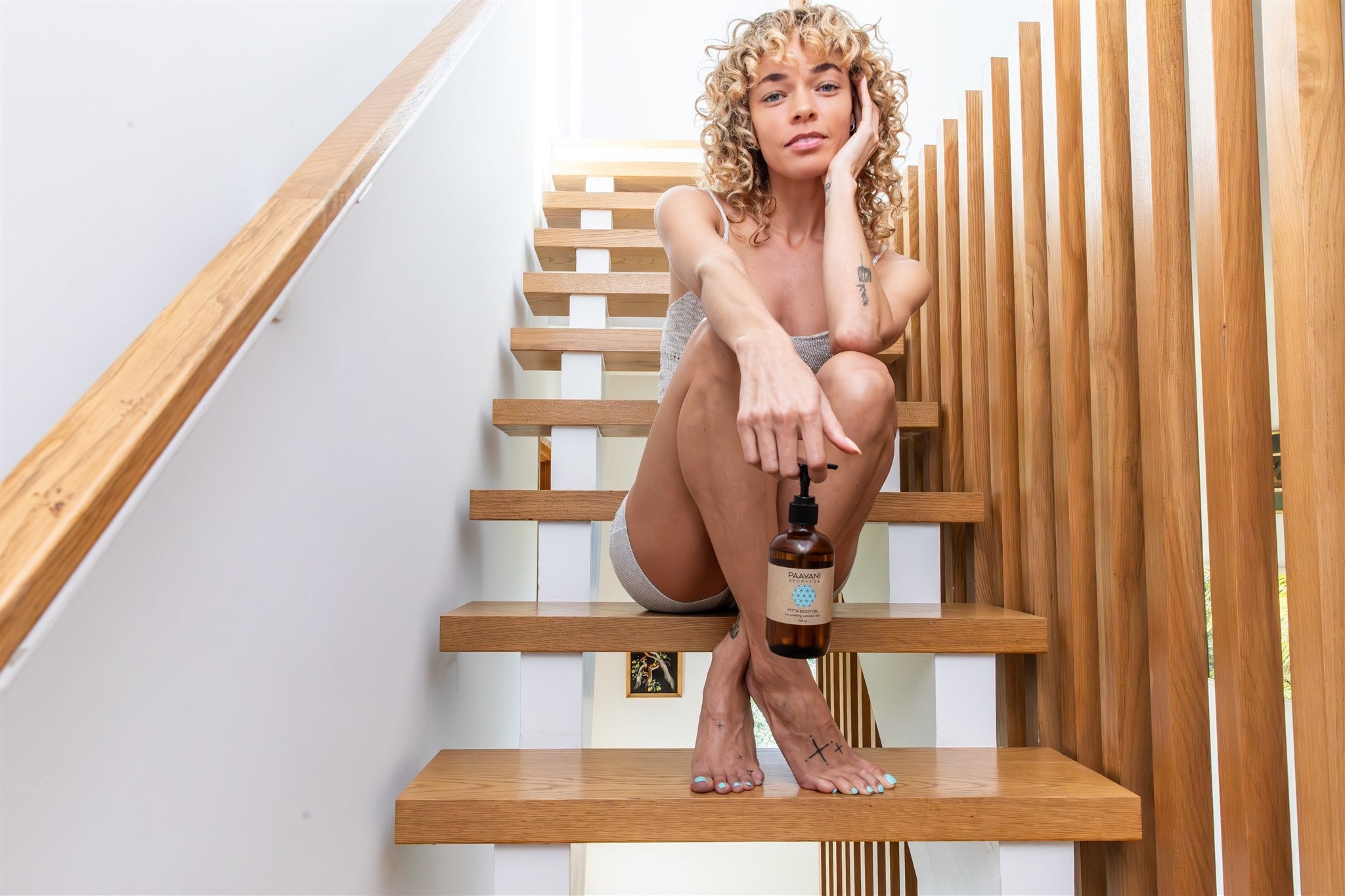
Marma work helps pitta by slowing stimulation and supporting rhythmic regulation rather than intensity. Cooling oils and slower pacing are especially supportive.
Kapha
Kapha governs structure, immunity and lubrication. When stagnant, kapha may feel heavy, dull or congested.
Gentle marma stimulation supports circulation and subtle movement without overstimulation, making it accessible even when energy feels low.

Key Marma Points Used in Daily Self-Care
While full marma therapy is traditionally performed by trained practitioners, several marma points are safe and effective for daily home practice.
Hridaya Marma (Heart Center)
Located at the center of the chest, this point supports emotional regulation, circulation and breath awareness. Gentle oil application here can help the body soften during moments of stress.
Nabhi Marma (Navel Center)
This point governs digestion, metabolism and emotional processing. Supporting nabhi marma with warm oil can help regulate agni and digestive rhythm.
Shankha Marma (Temples)
Associated with mental clarity and nervous system regulation. Slow circular motions here can help reduce overstimulation and support focus.
Kshipra Marma (Hands & Feet)
Located between the thumb and index finger and between the big toe and second toe. These points support circulation, tension release and energetic flow through the limbs.


Marma Therapy With Tools: The Role of Kansa
Traditionally, marma therapy is performed with the hands. However, Ayurveda has long used specific metals to enhance therapeutic effects, especially kansa, an alloy of copper and tin known for its balancing properties.
Kansa has been used in Ayurvedic rituals for centuries to support circulation, calm excess heat and encourage subtle energetic flow. When used gently, it enhances the effects of touch without overstimulation.
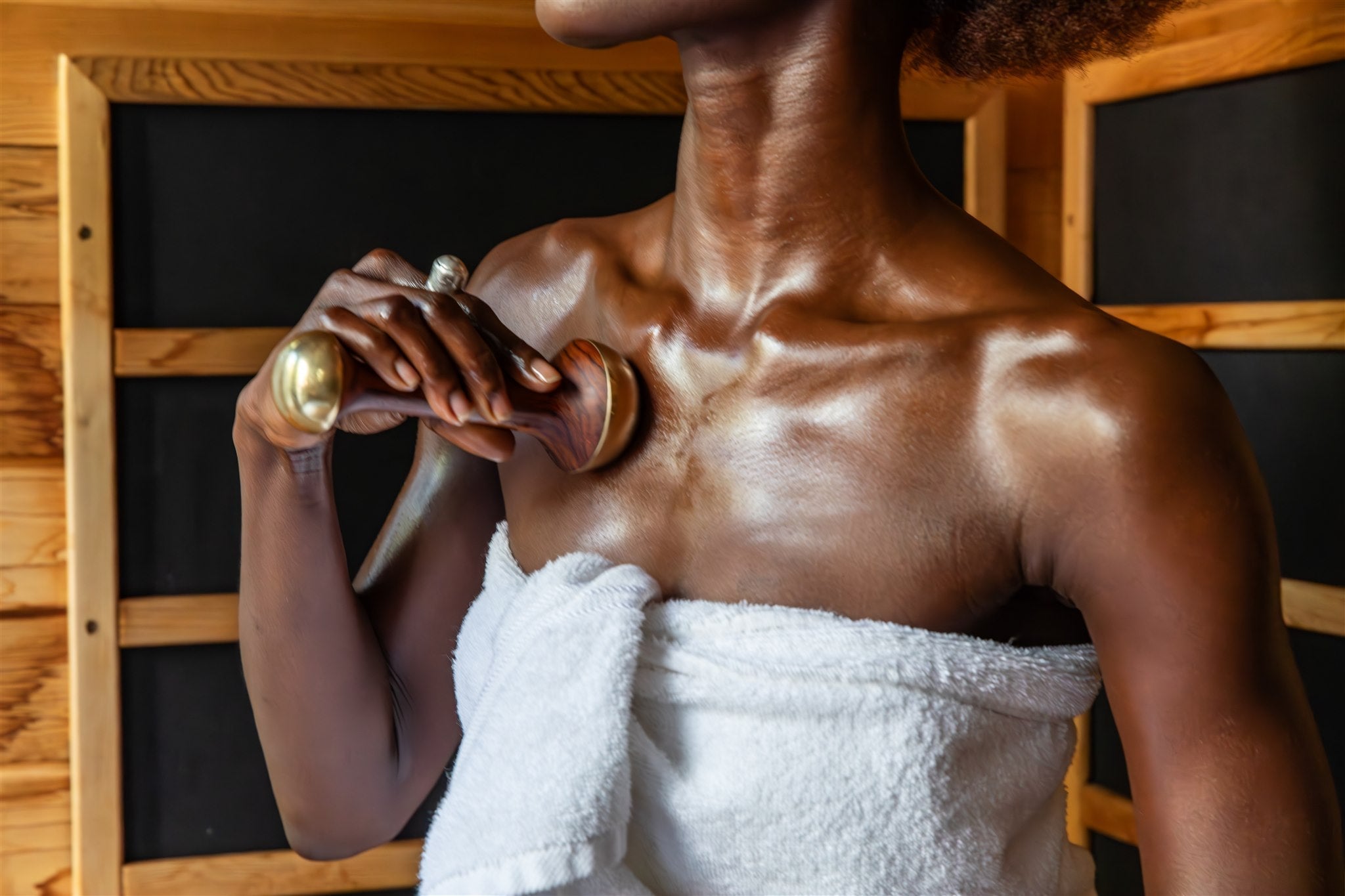
This is where tools like the Dual Dome Kansa Wand come in. Rather than replacing intuitive touch, a kansa tool offers precision and consistency, making it easier to stimulate marma points evenly, especially on the face, jaw, neck and shoulders, where pressure must remain light.
Why the Dual Dome Kansa Wand Works With Marma Points
Marma points respond best to slow, rhythmic, intentional movement. The Dual Dome Kansa Wand was designed with this principle in mind.
Its dual-ended shape allows you to work with both broader and more precise marma points, adapt pressure naturally without forcing, follow the contours of the face and body and maintain a steady, calming rhythm during massage.
When paired with oil, the kansa surface glides smoothly across the skin, supporting circulation while helping the nervous system relax into the sensation.
This makes it especially supportive for marma points around the face, temples, jawline, neck and shoulders or areas where stress and emotional tension commonly accumulate.
How to Use the Dual Dome Kansa Wand for Marma Massage
Marma massage does not require complex technique. In fact, it works best when kept simple.
A typical practice may look like this:
Begin by slowly inhaling and exhaling.
Use the larger dome for broader areas like the cheeks, neck or shoulders.
Use the smaller dome for more precise marma points, such as the temples or jaw.
Move slowly and repeat strokes rather than increasing pressure.
This is why marma massage videos emphasize pace over pressure. The goal is regulation, not force.
Marma Therapy as Part of Daily Rhythm
Marma therapy works best when it becomes part of daily rhythm rather than an occasional intervention.
The nervous system learns through repetition. When touch is offered consistently, the body begins to recognize it as a cue for safety and regulation.
This is why marma therapy pairs naturally with dinacharya, Ayurveda’s daily routine practices that support digestion, energy and mental clarity over time.

Marma Points & Abhyanga
Marma therapy is often integrated into abhyanga, Ayurveda’s traditional herbal oil massage practice.
While abhyanga nourishes the tissues and calms the nervous system, marma work adds precision and intention, helping direct benefits to specific systems.
Together, they support circulation and lymphatic flow, skin barrier health, detoxification pathways and nervous system resilience. This pairing makes marma therapy especially supportive during periods of stress or transition.


Why Marma Points Matter for Long-Term Wellness
Marma points remind us that the body is not mechanical. It is responsive, adaptive and deeply intelligent.
Rather than forcing outcomes, marma therapy invites cooperation. Over time, this approach supports steadier energy, clearer digestion and greater resilience. Not through intensity, but through rhythm.


Wellness in Rhythm
As you can see, daily wellness does not need to be complicated to be effective. Often, the most meaningful shifts come from small, repeated acts of care offered with awareness and consistency. Marma therapy is one such practice. Quiet, precise and deeply supportive, especially when practiced with love and intention. We hope these simple daily practices help you tune into your body, listen more closely and return to a gentle, supportive rhythm.


Leave a comment
This site is protected by hCaptcha and the hCaptcha Privacy Policy and Terms of Service apply.