


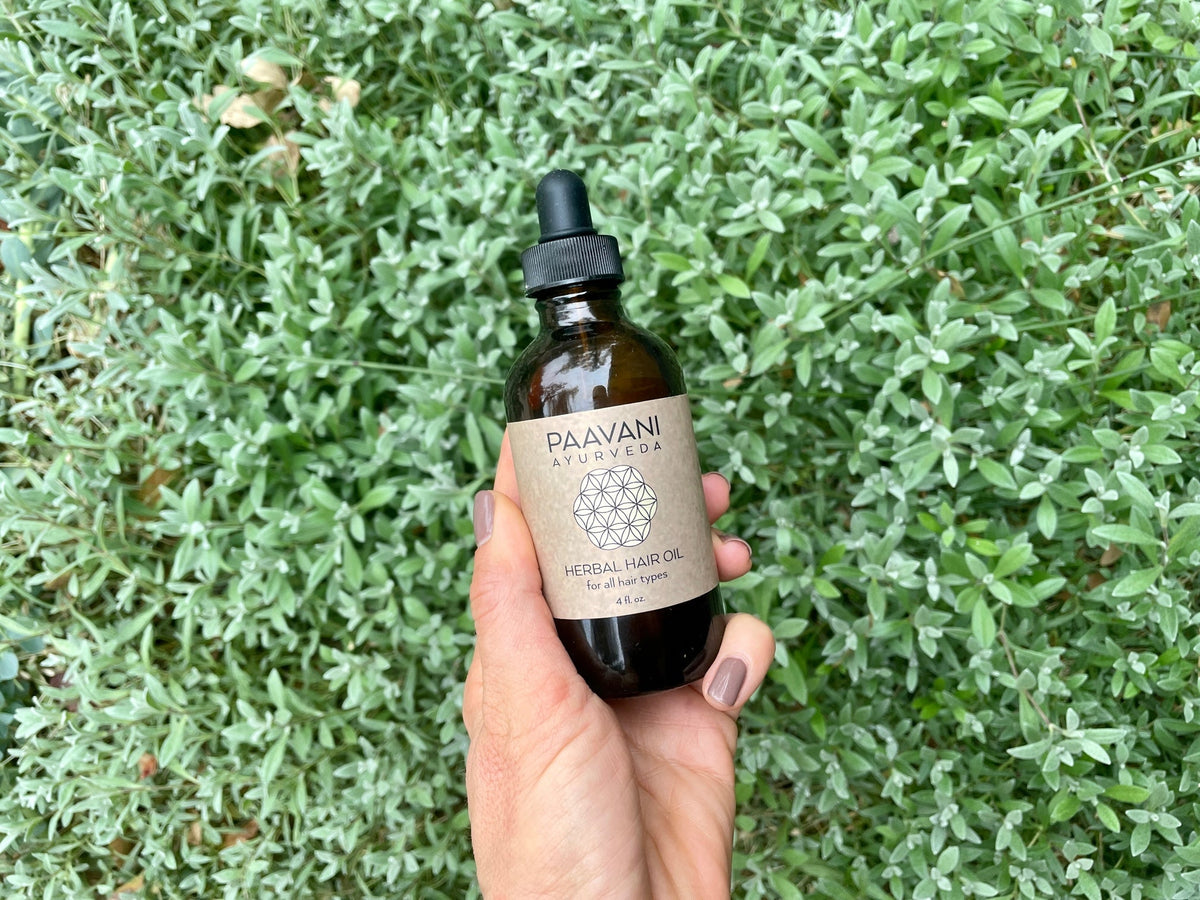
Ayurvedic Hair Oiling: Benefits, Herbs & How to Do It
Hair oiling is one of those rituals that can change the way you think about hair care. Rather than focusing only on the strands themselves, the practice begins at the scalp, using warm herbal oil and intentional massage to nourish the hair while creating a moment to slow down.
In Ayurveda, this ritual has been practiced for centuries as part of a more holistic approach to caring for the hair, scalp and nervous system. Ayurvedic hair oiling traditionally combines nourishing base oils with herbs selected for their specific qualities, then works the oil into the scalp and through the lengths of the hair before washing.
The practice can be especially supportive when hair feels dry, brittle or lackluster or when the scalp feels depleted. And because Ayurveda views hair as connected to the deeper nourishment of the body, hair oiling becomes more than a beauty ritual. It is one way of caring for the whole system through touch, warmth and botanical nourishment.
Below, we’ll explore the benefits of Ayurvedic hair oiling, the traditional herbs we use in our Herbal Hair Oil and how to bring this ritual into your own hair care practice.
What Is Ayurvedic Hair Oiling?
Hair oiling is a traditional Ayurvedic ritual of applying oil to the scalp and hair, often with gentle massage, allowing it to absorb before washing. Traditionally prepared herbal oils take the ritual a step further by infusing carrier oils with botanicals chosen for their specific Ayurvedic qualities and actions.
From an Ayurvedic perspective, healthy hair reflects more than what we apply externally. Hair is traditionally understood in relationship to asthi dhatu, the bone tissue layer and its nourishment is influenced by the deeper processes that build and sustain the tissues of the body. This is one reason Ayurveda approaches hair care from both the inside and out, considering digestion, nourishment, stress, lifestyle and daily rituals alongside topical care.
Hair oiling offers one way to bring this philosophy into practice. Working warm oil into the scalp provides external nourishment while the slow, repetitive movements of scalp massage create an opportunity to soften tension and settle the senses. Over time, the ritual becomes less about correcting the hair and more about consistently creating the conditions that support healthy-looking hair and scalp.

The Benefits of Ayurvedic Hair Oiling
One of the reasons hair oiling has remained part of Ayurvedic self-care for generations is its simplicity. Oil helps replenish what can be depleted through washing, heat styling, environmental exposure and the natural tendency toward dryness, while scalp massage brings touch and circulation into an area we often overlook.
Depending on the oils and herbs used, a regular Ayurvedic hair oiling ritual may help support:
- Softness & moisture: Oils help condition dry hair and reduce the appearance of frizz and brittleness.
- A nourished scalp: Applying oil directly to the scalp can help replenish dryness and create a more comfortable foundation for healthy-looking hair.
- Strength & shine: Consistent oiling helps condition the hair shaft, supporting smoother, more lustrous-looking strands.
- Scalp massage & circulation: The physical act of massage gently stimulates the scalp while creating a moment to release tension.
- A more grounding hair care ritual: In Ayurveda, touch and oil are used intentionally as forms of nourishment. Hair oiling extends that philosophy to the scalp and senses.
The effects of hair oiling are often most noticeable through consistency rather than intensity. In our own practice, we return to this ritual about once a week, giving the hair and scalp regular nourishment while creating a small pause in the rhythm of the week. We find it especially supportive during periods of dryness, stress or seasonal transition.

Ayurvedic Herbs & Oils for Healthy Hair
The qualities of a hair oil depend on what goes into it and how those ingredients are prepared. Balancing to all three doshas, our Herbal Hair Oil combines nourishing base oils with whole Ayurvedic herbs and aromatic botanicals traditionally used to care for the hair and scalp.
We prepare the formula using a traditional Ayurvedic method in which whole herbs are cooked into carrier oils, allowing the oil-soluble constituents of the plants to become part of the finished preparation. The result is an herbal oil designed to support the hair and scalp while bringing the sensory and ritual benefits of Ayurvedic hair oiling into modern life.
Base Oils
Sunflower Oil
Lightweight and nourishing, sunflower oil helps condition the hair and scalp without feeling overly heavy. Rich in naturally occurring fatty acids and vitamin E, it helps replenish moisture, soften dry or brittle strands and support smoother, shinier-looking hair. Its cooling quality also makes sunflower oil particularly supportive for balancing excess pitta.
Sesame Oil
Sesame oil is one of Ayurveda's most revered oils for nourishment and is traditionally used in practices from abhyanga to scalp massage. Rich and warming in quality, it helps condition dry, brittle hair and replenish a scalp that feels depleted or flaky. Its grounding, unctuous nature is especially balancing for vata, making it a natural foundation for an Ayurvedic hair oiling ritual.
Ayurvedic Herbs for Hair & Scalp
Brahmi
A revered rejuvenative in Ayurveda, brahmi is traditionally used to support both the mind and the tissues of the body. Its cooling, soothing qualities make it particularly supportive for the scalp while its antioxidant-rich nature helps nourish and protect the hair. Brahmi is also traditionally valued for calming the mind, bringing another dimension to the grounding experience of scalp massage and hair oiling.
Bhringaraj
Often referred to in Ayurveda as the “ruler of hair,” bhringaraj is one of the tradition's most celebrated herbs for hair and scalp care. It is traditionally used to nourish the hair roots, support strong, healthy-looking hair and care for a dry or irritated scalp. Its cooling qualities are particularly valued when excess pitta shows up through heat or sensitivity at the scalp, making bhringaraj a foundational herb in Ayurvedic hair oil formulations.
Ashwagandha
Ashwagandha is one of Ayurveda's best-known rasayana, or rejuvenative, herbs. Traditionally used to strengthen and restore the body during periods of stress or depletion, its grounding and nourishing qualities make it especially supportive for vata. Within a hair oiling ritual, ashwagandha complements the physical nourishment of the scalp with Ayurveda's broader understanding that healthy hair is connected to the nourishment and resilience of the whole system.
Amalaki
Also known as amla, amalaki is a revered Ayurvedic rejuvenative traditionally associated with healthy hair and longevity. Naturally rich in antioxidant compounds and vitamin C, it helps condition the hair and scalp while supporting smoothness, strength and shine. Its cooling qualities are especially balancing for pitta, which is one reason amalaki has long held an important place in traditional Ayurvedic hair care.

Essential Oils
Cedar Atlas
Woody and grounding, cedar atlas essential oil brings both aromatic and functional qualities to the formula. Traditionally used in hair and scalp care, it helps support a balanced scalp while complementing the more nourishing oils and herbs in the blend. Its warm, earthy aroma also adds a grounding sensory element to the hair oiling ritual.
Rosemary
Rosemary has a long history of use in herbal hair and scalp care and has become increasingly recognized in modern wellness for its potential role in supporting healthy hair. Stimulating and clarifying in nature, rosemary is traditionally used to invigorate the scalp and support circulation while helping hair feel fresh and revitalized. Its uplifting aromatic quality also balances the richer, more grounding elements of the formula.
Lavender
Cooling and soothing, lavender essential oil helps care for the scalp while bringing a soft aromatic quality to the ritual. In Ayurveda, its calming nature pairs particularly well with the slow, intentional practice of scalp massage, helping create a sense of ease as the oil is worked through the hair. Its balancing qualities also complement the more stimulating herbs and essential oils within the formula.
Peppermint
Cooling and invigorating, peppermint essential oil creates the refreshing sensation often associated with scalp massage. Its stimulating qualities help awaken the senses and complement rosemary and bhringaraj while its cooling nature brings balance to the richer oils within the formula. Used in a carefully balanced amount, peppermint adds freshness without overpowering the nourishing quality of the hair oil.
Ayurvedic Hair Oiling by Dosha
Vata Hair & Scalp
Vata qualities are dry, light, rough and mobile, so these same characteristics can sometimes be reflected in the hair and scalp. Vata-predominant hair may feel fine, dry or frizzy and can be more prone to brittleness and breakage, while the scalp may feel dry, tight or flaky.
For these qualities, Ayurveda emphasizes warmth, moisture and nourishment. A regular hair oiling ritual can help replenish dryness and soften the hair while the slow, repetitive movement of scalp massage offers the grounding quality that vata often responds to well. Rich sesame oil and nourishing herbs such as bhringaraj and ashwagandha make this an especially supportive ritual during dry seasons or periods when vata feels elevated.
Pitta Hair & Scalp
Pitta brings qualities of heat, sharpness and intensity. Pitta-predominant hair is traditionally described as finer in texture, while the scalp may be more sensitive or prone to heat and oiliness. Ayurveda also associates excess pitta with premature thinning or graying, particularly when heat and stress accumulate over time.
Cooling, soothing ingredients are therefore emphasized when caring for pitta hair and scalp. Sunflower oil, brahmi, amalaki and lavender bring cooling qualities to the ritual while gentle scalp massage creates an opportunity to soften some of the intensity that can accompany elevated pitta.
Kapha Hair & Scalp
Kapha qualities are heavy, cool, smooth and stable and kapha-predominant hair often reflects some of this natural abundance. Hair may be thick, strong or naturally lustrous, while the scalp can be more prone to oiliness, heaviness or buildup.
Kapha generally benefits from a lighter, more stimulating approach to hair oiling. Invigorating botanicals such as rosemary and peppermint help bring a sense of freshness to the scalp while massage encourages movement and stimulation. Those with naturally oily hair may also find that they prefer less oil or a shorter treatment time rather than leaving the oil on overnight.

How to Practice Ayurvedic Hair Oiling
Ayurvedic hair oiling can be as simple as setting aside a little time once a week to nourish the scalp and hair before washing. We like to approach it as a ritual rather than another step in a beauty routine, allowing the warmth of the oil and the rhythm of massage to create a moment of care for both the hair and senses.
Our Herbal Hair Oil can be used as a weekly scalp and hair treatment or in smaller amounts between washes to replenish dry ends, soften frizz and add shine. For a deeper Ayurvedic hair oiling ritual, follow the practice below.
1. Gently Warm the Oil
Warm your hair oil by placing the bottle in a bowl of warm water for a few minutes. The oil should feel comfortably warm against the skin, never hot.
2. Apply Oil to the Scalp
Part the hair and apply a small amount of oil directly along the scalp. Continue creating sections and applying oil until it is distributed throughout the scalp. You don't need to saturate the hair. A little oil goes a long way.
3. Massage Slowly
Using the pads of your fingertips, gently massage the oil into the scalp with slow circular movements. Move across the entire scalp, including the crown, temples and base of the head, allowing your touch to be intentional rather than rushed.
4. Work the Oil Through the Hair
Use your fingertips or a wide-tooth comb to distribute the remaining oil from the roots through the lengths and ends of the hair. If your ends tend to feel particularly dry, apply a little additional oil there.
5. Let the Oil Absorb
Leave the oil on for at least 30 minutes before washing. If it feels supportive for your hair type, you can leave it on longer or overnight, protecting your pillow with a towel or fabric you don't mind getting oily.
Remember the doshic guidance above: those with naturally oily or kapha-predominant hair may prefer a lighter application and shorter treatment time.
6. Wash Thoroughly
One of our favorite tricks for removing hair oil is to apply shampoo directly to the dry, oiled hair before adding water. Work the shampoo through the scalp and hair, then add water and rinse thoroughly. Shampoo a second time if needed.
How Often Should You Oil Your Hair?
For most people, once a week is a simple place to begin. Ayurveda encourages us to observe how the hair and scalp respond rather than follow a rigid schedule. Dry, vata-predominant hair may appreciate more frequent nourishment, while naturally oily or kapha-predominant hair may feel better with less oil or less frequent treatments.
Between deeper treatments, a few drops of Herbal Hair Oil can also be worked through damp or dry ends as needed for added moisture, softness and shine.
Frequently Asked Questions About Ayurvedic Hair Oiling
How often should you practice Ayurvedic hair oiling?
Once a week is a supportive starting point for many people, though Ayurveda encourages adjusting the ritual to your individual hair, scalp and current state of balance. Dry or vata-predominant hair may appreciate more frequent nourishment, while naturally oily or kapha-predominant hair may prefer less frequent treatments or a lighter application.
How long should you leave Ayurvedic hair oil in?
Allow the oil to remain on the hair and scalp for at least 30 minutes before washing. You can leave it on longer or overnight if that works well for your hair type. The goal is consistency rather than leaving the oil on for the longest possible amount of time.
Should Ayurvedic hair oil be applied to wet or dry hair?
For a traditional pre-wash hair oiling ritual, apply the oil to dry hair and scalp so you can massage it directly into the roots and distribute it through the lengths. A few drops can also be applied to damp or dry ends between washes when additional moisture, softness or shine is needed.
What herbs are traditionally used in Ayurvedic hair oil?
Bhringaraj, brahmi and amalaki are among the herbs traditionally associated with Ayurvedic hair care. Our Herbal Hair Oil pairs these botanicals with ashwagandha, sesame and sunflower oils and aromatic plants such as rosemary, lavender and peppermint to create a formula balancing to all three doshas.
A Ritual Worth Returning To
Ayurvedic hair oiling is one of those practices we continue to love because it asks for very little and gives us a reason to slow down. Warm oil, nourishing herbs and a few minutes of intentional touch can turn something as ordinary as washing your hair into a ritual of care for the hair, scalp and senses.
Over the years, this is something we have returned to again and again, especially when the hair feels dry, the mind feels busy or the seasons begin to shift. As with so many Ayurvedic practices, there is no need to make it perfect. Notice how your hair and scalp respond, adjust the ritual to what you need and let consistency do the rest.


7 comments
aditya
Spertomax Sexual Performance Medicine is a product designed to address sexual performance concerns and enhance overall sexual vitality. Spertomax
Spertomax
Enhanced Wellness Spectrum:“Ayurvedic Multivitamin Tablets” could promise a broader spectrum of wellness benefits compared to standard multivitamins.
Ayurvedic Multivitamin Tablet
Ayurveda’s wisdom on mindful transitions reminds us to flow gracefully through life’s changes."
ayurvedic medicine for kidney stone triphala/
ayurleaf herbals
ayurvedic medicine for kidney stone
thanks for the beautiful blogs it is very helpful and it also helps to improve the hair fall .classical ayurvedic medicine
rohit
rohit
Great post to read. The ayurvedic remedies are very useful to control my hair fall. Get more details about hair fall visit us on https://www.agastiayurveda.com/treatment-for-hair-fall-in-chennai.php
Agasti Ayurveda Hospital
Leave a comment
This site is protected by hCaptcha and the hCaptcha Privacy Policy and Terms of Service apply.